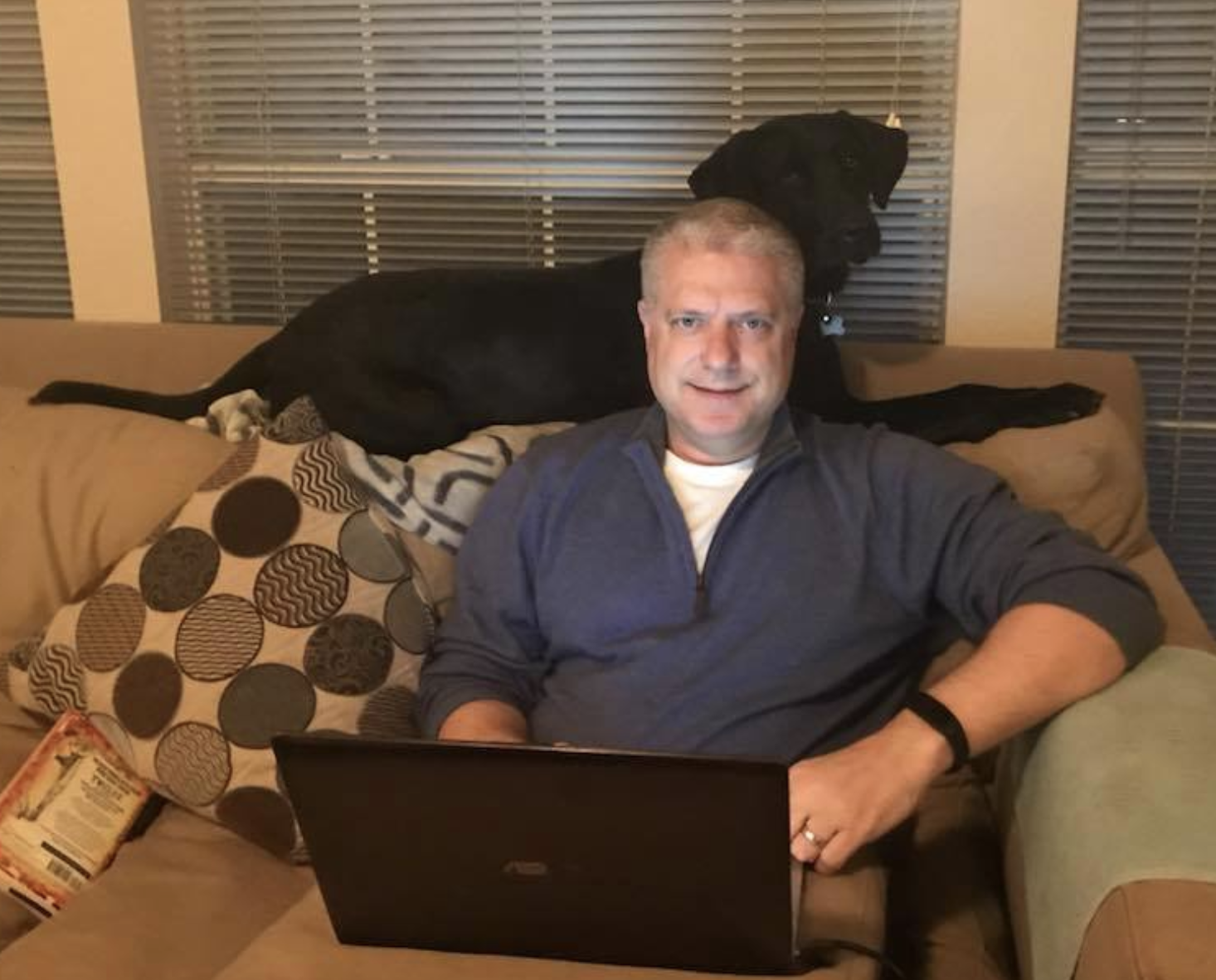
One of the delights of having a blog is reading the comments, getting feedback from readers (thanks mum!). One person who has been reading for a while and making sage and interesting remarks is a gentleman who signs his comments "Assistant County Attorney."
Well, he's now been promoted. I don't mean he's now the Actual County Attorney, no, what I'm saying is that he has been promoted from commenter to blogger. Right here, every Tuesday, he'll be giving us his perspective on criminal law from some place in Texas I've never been.
So this is what he wants you to know about him (for now!):
Like D.A. Confidential, I’m a prosecuting attorney in Texas. However, I’m an Assistant County Attorney. As in most things relating to criminal law in our state, the Texas system of dividing up prosecutions is unique, bizarre, internally inconsistent, and often nonsensical. Some D.A.’s offices prosecute both misdemeanors and felonies, and a very few County Attorney’s offices prosecute both. However, the general outline in many counties is this- the District Attorney’s office prosecutes felonies, and the County Attorney’s office prosecutes misdemeanors. I belong in that latter group. I’ve been offered the chance to write here about what life is like on my floor of the courthouse, and I hope you’ll find that it makes for an interesting compliment to what DAC writes.
So who am I? Well, I’m the lone Assistant County Attorney in a South Texas county. I grew up in Texas, went to law school on the East Coast, worked in heavy duty civil litigation for a bit, and then fled back home for more interesting work. Like DAC, I have my boss’s blessing to post, but will hold onto this nom de plume for a bit. I only speak for myself- not for my office, not for the State of Texas, not for D.A. Confidential, and not for Travis County.
There are some technical differences between what DAC does and what I do. Misdemeanors don’t get indicted by a grand jury, for instance. I’ve never seen a pre-sentence investigation report. My trials rarely have more than two or three witnesses, and sometimes not even that many. But by far the biggest difference is that every jury can sympathize with a misdemeanor defendant. When a jury looks at a defendant who’s been charged with a DWI or possession of marijuana, they can see themselves or their no good brother in law. When a jury looks at a defendant charged with child abuse or murder, that empathy is much harder to come by.
So my hope is that by writing about what I do, you the faithful reader, will have a better idea about how the criminal justice system affects “people like us.” Not bad people generally, just people that made a bad decision. As always, your questions, comments and feedback are always welcome. And yes, I know I use too many commas. I can’t help it.
His first substantive post will be next Tuesday, when he'll go into what kinds of cases he handles, and what his job entails, in a little more depth.
Here's how it works: I spend the morning in court, on a regular docket day, and come down about lunchtime to find a stack, large or small, of new cases on my chair. Kind of like Christmas, right?
Well, continuing my mission of letting you all know what kind of work we do here, I thought I'd give a rough overview of the cases I found on my chair last week.
1. Evading arrest. State jail felony.
2. Evading arrest. State jail felony.
3. Aggravated assault with a deadly weapon. Second degree felony.
4. DWI 3rd Offense. Third degree felony.
5. Possession of a controlled substance (cocaine). State jail felony.
6. Delivery of a controlled substance (cocaine). State jail felony.
7. Delivery of a controlled substance (cocaine). Second degree felony.
8. Arson (of a building, but not a habitation). Second degree felony.
9. Delivery of a controlled substance (cocaine). State jail felony.
10. Possession of a controlled substance (cocaine). State jail felony.
11. Evading arrest. State jail felony.
Of these, the arson will take the most time, I already spent an afternoon going through the file prepared by the fire investigators. Even so, I'll be busy this week reading offense reports, ordering up video tapes and drug analysis reports, and making recommendations. But that's okay, I have an office with a window now. Did I mention that? Oh, sure, it looks out onto the jail but it's a window and I love it.
Some colleagues over at the Austin Fire Department kindly agreed to take part in my occasional Q & A series. I have had two cases (and a new one landed on my desk today) with these guys and I can tell you that they know their stuff. Some fire investigators have gotten bad press lately, so I'm pleased to share a little about what they do.
1. What is your professional background?
Each AFD Fire and Arson Investigator has to have the following certifications: Texas Commission on Fire Protection Arson Investigator, Structural Fire Fighter, Fire Instructor, and Fire Inspector. They are all Emergency Medical Technicians certified by the Texas Department of Health. And, they also have to be licensed peace officers. Several of the more tenured investigators also have CFI (certified fire investigator) status through the International Association of Arson Investigators.
2. What training does a fire investigator have before being given thattitle?
Each AFD Investigator has to promote to the rank of Lieutenant within the department before being considered for an open position. This ensures that the investigator has several years of training and experience within the field of fire suppression before they are assigned as investigators. Once assigned to the unit, the new investigator will be enrolled in a basic peace officer academy. Once that training is complete, they have to complete a 150 hour course on fire investigation (as outlined by the TCFP).
3. How many fires do you investigate, as lead or on the team, per month?
AFD Investigations performs approximately 400 investigations per year. Assignment as a lead investigator is dependent upon staffing at the time of the receipt of alarm but, on average, each investigator will be assigned as a lead 35-40 times per year.
4. What is the hardest thing about your job?
Fire Scene examinations are probably the most physically tough portion of this job (and the dirtiest). Investigators are required to excavate the fire scene, collect artifacts from the debris, reconstruct the scene with the remnants, and make conclusions about their findings (i.e. where the fire started and what caused it to occur).
5. Do you continue to take training once you are an investigator?
After the initial training, each investigator is required to maintain the continuing education requirements for EMT, Firefighter, Hazmat, and for Peace Officer. Additionally, each AFD Investigator will participate in annual evaluations of their fire pattern recognition ability.
6. Take us through the steps you take when you arrive at the scene of a fire. Maybe start with what you are trying to accomplish.
First, a fire must occur. Once this happens a call to 911 is made by the observer and fire crews respond to the event. During the course of the extinguishment and overhaul of the fire scene, the responding fire crews will determine the cause of the fire. If they cannot or, if they determine that it was most likely an incendiary event, the fire crews will call for the response of the fire and arson investigators. Fire investigators arrive on scene and begin collecting information. This information may be in the form of dispatch information (911 caller info, date or time relevance, etc.), eye witnesses on scene, and fire crew observations. Investigators will then examine the exterior of the burned building or vehicle by completing a 360 degree tour of the scene. They will note anything that may be of importance to the investigation (i.e. gas cans sitting nearby, broken windows, general housekeeping, curious observers in the crowd, etc.).
Once the exterior observation is complete, they will move to the interior. Along the way, they will note any signs of forced entry into the building or vehicle. Observations will be noted with regard to fire movement and intensity patterns (burn patterns left upon wall surfaces, construction members, and or furnishings). From these observations, the investigator will began to formulate a hypothesis with regard to where the fire started. Once the investigator has a room or area of origin determined, he / she will begin excavating fire debris and searching for potential ignition sources.
All potential ignition sources have to be considered (electrical, smoking materials, spontaneous combustion, or act of arson to name a few). After locating all potential sources of ignition, the investigator will examine each more thoroughly in order to eliminate or validate the items potential for having caused the fire. Often times, the investigator will reconstruct the room with the remnants identified during the scene excavation. This reconstruction of the scene, will often assist the investigator by showing areas of greater damage (i.e. the remnants of a couch show that the left end of the frame is more intact that the right end. This may mean that the fire started and burned longer near the right end of the couch.) If the investigator is able to make a determination, based upon their findings, a cause determination is made. If the cause is arson, the investigator will then identify and pursue the individual(s) responsible.
7. Any funny/weird stories or anecdotes you can share?
After a structure fire, AFD Investigator's attention was drawn to a vehicle on the property/garage. A routine inventory was done for damages and reporting purposes. The gentleman associated with the property was on parole. During the search several firearms were discovered. When asked about the origin of the weapons, the gentleman replied, "Those can't be my guns....it's illegal for me to have guns....so...those can't be my guns..."
8. Can fingerprints or DNA survive a fire?
DNA and fingerprints can definitely survive a fire event. This of course ultimately depends upon the extent of fire damage to the building or furnishings upon which the evidence is located. Research shows that DNA evidence can survive a fairly significant exposure to fire.
9. What are the telltale signs of an accelerant being used (if any)?
There are several potential indicators of accelerant use. However, each of these indicators must be considered with other pertinent data before a conclusion can be made. Some of the signs to look for are burn patterns on flooring that are inconsistent with the fire scene, smells within piles of debris or in the open air, fires that flash back upon extinguishment, fires that seem to have an accelerated time line of events, inverted v-patterns (normally fires burn up and out and cause a v- shaped pattern to occur on wall surfaces), or unusual flame color or smoke production.
In lieu of just a book review/recommendation, I am delighted to present a brief interview with thriller writer Jeff Abbott.
I'm reading one of his most popular novels, PANIC, right now. Honestly, I was afraid to try it because, well, what if I didn't like a thriller by a fellow-writer from Austin? And one I'd asked to do an interview with??
Not a problem, holy cow. Honestly, of all my book recs, and if you want a good thriller, this is the one. Seriously.
Go to his website (link above) to learn about him and his books, but expect to see the words "international-bestselling"... "award-winning".... “exciting, shrewd, and beautifully crafted” (Chicago Tribune) ... “fresh, original… intricately woven” (Publishers Weekly), .... "three-time nominee for the Mystery Writers of America’s Edgar Allan Poe Award" ... "two-time nominee for the Anthony Award."
Yeah, that's a lot of nice words for a writer, trust me.
So, the interview:
1. Did you always want to be a writer growing up, or did you come to it as an adult?
I always wanted to write. My 2nd grade teacher told my parents to get me a Big Chief tablet and a Husky pencil so I could write down the stories I was always telling in class. I wrote a 500-page manuscript in high school, I always knew this was what I wanted to do.
2. What is your writing schedule?
Generally I write first thing in the morning. I try to reach a word count each day; sometimes I can do it in a couple of hours, sometimes it takes all day. I try to save the afternoon for the administrative side of writing: answering emails, editorial discussions, marketing related stuff. The Internet has made it harder to maintain a schedule—too many interruptions. I’m becoming a big believer in disconnecting during work time.
3. Do you find people recognize you? Do you mind?!
It’s only happened a few times to me. Most writers don’t get recognized and we probably are grateful for our anonymity. It’s never been a bad experience, though.
4. Do you actively look for story ideas (combing newspapers etc), or do they just come to you?
No, I don’t comb newspapers or magazines. Sometimes I’ll read or hear something that will prompt an idea, but most of the times ideas just come to me. Ideas are the easiest thing to have. Picking and executing on the right idea is the hard part. Best ideas come in seclusion: the shower (where the idea for PANIC came to me), long walks (where the main character in FEAR came to me), times when the outside world is at bay. One of my editors said it best: ideas are easy, execution is hard.
5. Have you ever thought about writing in a different genre?
I enjoy reading historical fiction (and I have a history degree), and I enjoy reading books with my kids, and maybe one day I’ll write something in those fields. I’ve been approached to work on some screenwriting projects, and film writing’s been an interesting experience, very different from writing books. I have a short story in an upcoming anthology called Death’s Excellent Vacation, edited by Charlaine Harris (author of the bestselling Southern Vampire series, the basis for True Blood) and Toni Kelner, and that was the first time I really ever wrote a story with a supernatural bent, and it was a lot of fun.
7. If you could offer just one piece of advice to aspiring novelists, what would it be?
Learn your craft. (which is short for saying a lot: polish your work as much as possible, be smart about researching the business of publishing and rely on reputable sources, read a lot, write a lot, act like a professional and you’ll get treated like a professional.)
8. Do you outline your novels?
I work from a loose outline; I usually think about the major emotional moments in the book for the characters; what are the points where they face their biggest choices, their highest stakes? If I start to feel lost then I will stop and outline the rest of the book and work from there. I think outlines need to stay fluid, you make them too strict and they don’t work for me. Right now I write in Scrivener and I have a list of scenes that serves as a rough outline as I’m working. My books do tend to follow a classical three-act structure and I like to know where I’m going, but still want to be able to include better ideas as they occur to me as I’m writing, and getting to know the characters better.
9. How much energy do you put into the language aspect of your novels?
I always try to write clearly and concisely; I’m not really aware of spending extra time on the language aspect of it, it’s all part and parcel of the same process. I certainly believe in the value of rewriting and polishing as much as possible. My first goal is always to entertain, to give you back for your investment in time and money. Anything else is cake.
10. Do you recommend any specific "how-to" writing books for mystery/thriller writers?
Patricia Highsmith’s classic Plotting and Writing Suspense Fiction is a great read, although her process is very specific to her. But it’s interesting to see her insights into how she conceived and wrote her books. I think a great book is Dorothea Brande’s Becoming a Writer, which talks a lot about establishing schedules, and thinking and observing the world like writers do. She wrote it back in the 1930s and it’s still powerful. Twyla Tharp’s The Creative Habit is a must read, full of great advice for anyone following a dream.
11. Is there any part of being a professional, full-time writer that you don't like?
No, I love it all. I worked hard to get here and I have no complaints. Any time I feel frustrated I remember when I was working toward this, and my frustration vanishes. I am getting to live my dream.
12. Did you have a lot of support when you began writing, or did you suffer the same raised eyebrow most of us do? In other words, what kept you motivated at the start of your career?
I wanted to do it more than I wanted to do anything else. I did have the unstinting support of my friends and family, no one ever told me I couldn’t do it, but I knew it would be very difficult. My father was a voracious reader, and the first manuscript I wrote I gave to him, and he put it aside after fifty pages and said “I’m sorry, the story’s not that interesting, I think you can do better.” I was crushed. But I realized he was right. The second manuscript I gave him was DO UNTO OTHERS, and he read it in one sitting and he said, “This is going to sell, Jeff.” And he was right, I got two offers from major publishers on that book and it won two of the major mystery awards. I appreciate his honesty now.
I thought it might be interesting for those who've not seen one before to have a look at an actual indictment, the "charging instrument" that exists in every felony case that goes to trial.
Basically, it's a legal document that is designed to inform the defendant of the charges against him. As a result, it must contain the date, the place (which, in my cases, must be Travis County, Texas), and the basic elements of the crime we are alleging.
Here, it's a DWI. That means we have to allege the defendant was driving while intoxicated, where he was driving, and also allege that he has two prior DWI convictions (otherwise it would be a misdemeanor).
Note: although indictments are public documents, I have blanked out identifying information. I thought long and hard about it, and in the end decided that while the indictment can be viewed by anyone in the clerk's file, as long as it's in the file it remains tucked away amongst hundreds of others. I didn't want anyone to think I was intentionally (or unfairly) parading this particular defendant/case in front of my few but interested readers.
As I mentioned, the purpose of the indictment is to give the defendant notice of exactly what the charge is. As a result, he or she must receive a copy of the indictment at least ten days before trial. The indictment is also read aloud to the jury at the start of the trial, it's the very first thing that happens, right before opening statements.
I am an assistant district attorney in Texas. A former newspaper reporter, I still write but have moved into fiction. My novel, THE BOOKSELLER, will soon be on submission to publishers and is represented by Ann Collette of the Helen Rees Agency.